
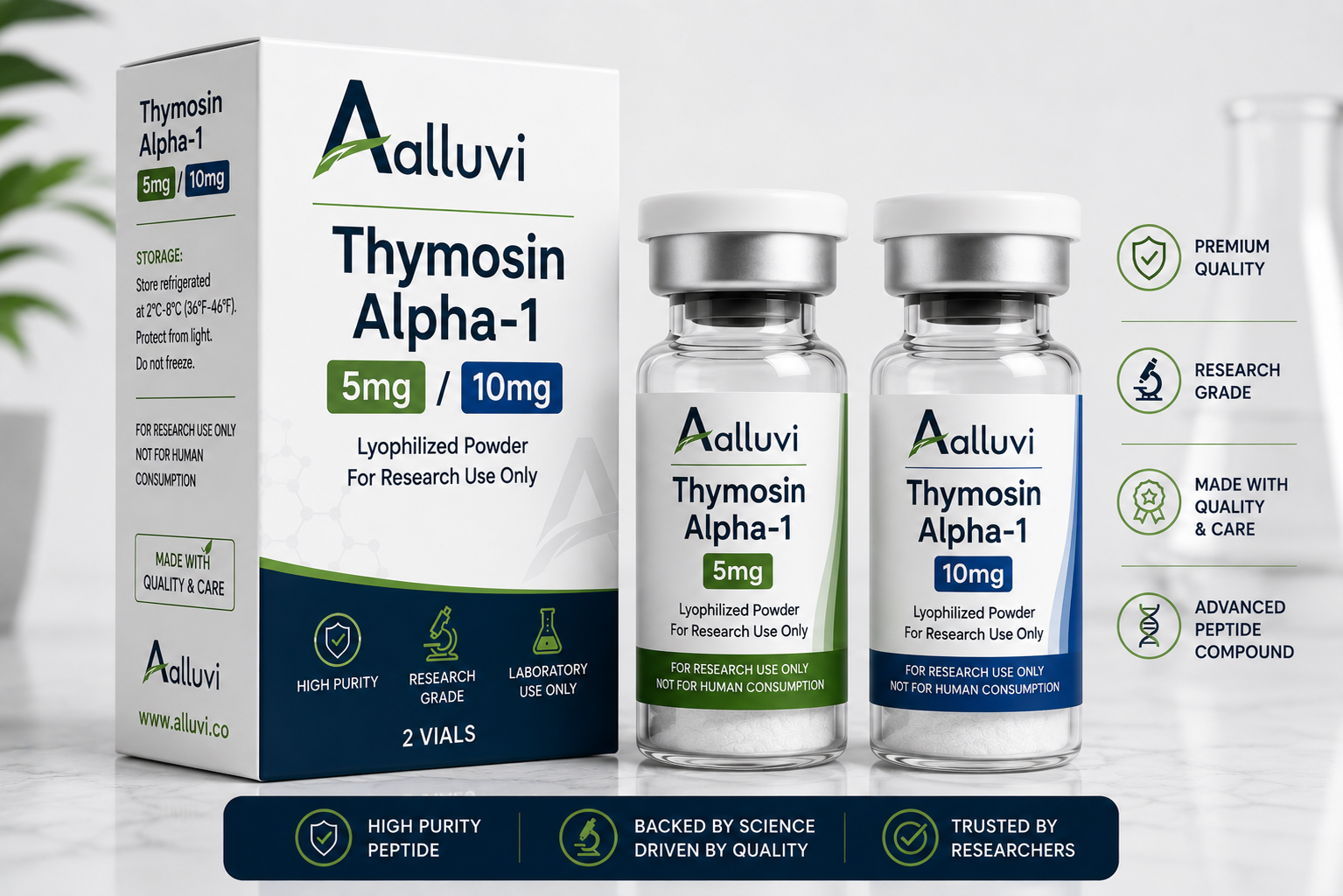

Buy Thymosin Alpha-1 Peptide 5mg/10mg: Research & Benefits
Delve into the fascinating world of Thymosin Alpha-1, a powerful peptide with significant implications for immunological research. This article explores its structure, functions, and the diverse benefits it offers, particularly in understanding and enhancing immune responses.
Understanding Thymosin Alpha-1
What is Thymosin Alpha-1?
Thymosin alpha-1 is a naturally occurring peptide, specifically a 28-amino-acid thymic peptide, that plays a crucial role in modulating the immune system. Derived from the thymus gland, this immunomodulatory compound is instrumental in enhancing both innate and adaptive immune responses. Its synthetic counterpart, available for research purposes, is vital for scientific investigations into immune signaling and T-cell function, offering a powerful tool to understand complex cellular immunity mechanisms.
Thymosin Alpha-1 Peptide Structure
The molecular structure of thymosin alpha-1 is a precise 28-amino-acid peptide, which grants it its potent biological activity. This specific sequence is critical for its interaction with various immune cells, facilitating T-cell maturation and differentiation. Researchers utilizing this research peptide must ensure high purity, often verified by HPLC, to guarantee reliable results in their laboratory research protocols. Understanding this structure is fundamental to deciphering its mechanism of action and its therapeutic potential.
Forms and Dosages: 5mg vs 10mg
When looking to buy thymosin alpha-1 for research use, it is commonly supplied in vials. The choice between vial sizes often depends on the scale and specific requirements of the laboratory research project. Researchers will need to consider their experimental protocol and reconstitution needs to select the appropriate amount, ensuring they have sufficient supply to conduct their studies effectively and to verify the compound’s integrity through the certificate of analysis (COA) and batch number.
| Vial Size | Peptide Content |
|---|---|
| Standard Vial | 5mg thymosin alpha-1 |
| Standard Vial | 10mg thymosin alpha-1 |
Research and Benefits of Thymosin Alpha-1
Immunomodulatory Effects
Thymosin alpha-1, a synthetic 28-amino-acid thymic peptide, exhibits profound immunomodulatory effects, playing a crucial role in enhancing both innate and adaptive immune responses. Its ability to modulate the immune system makes it a valuable compound for laboratory research, particularly in understanding how to enhance the body’s defense mechanisms. Researchers often buy thymosin alpha-1 5mg or 10mg vials to explore its capacity to strengthen cellular immunity and improve overall immune function, ensuring a robust response against various pathogens.
Mechanism of Action in the Immune System
The mechanism of action for thymosin alpha-1 involves complex interactions within the immune system, primarily through the activation of dendritic cells and the enhancement of T-cell maturation and differentiation. This naturally occurring peptide influences crucial immune signaling pathways, promoting a balanced and effective immune response. Research use of thymosin alpha-1 allows scientists to investigate how this 28-amino-acid peptide modulates cytokine production and activates Toll-like receptor pathways, thereby strengthening both innate and adaptive immunity, which is critical for combating viral infections and other threats.
Research Use in Clinical Studies
Thymosin alpha-1 has been extensively studied for research purposes in various clinical settings due to its promising immunomodulatory properties. Its utility in clinical studies is diverse:
| Area of Investigation | Details |
|---|---|
| Vaccine Response | Exploring its potential in enhancing vaccine response. |
| Immunocompromised Individuals | Investigating its effects in immunocompromised individuals. |
Researchers ensure the purity of their thymosin alpha-1 supply when conducting these critical trials. Purity is often verified by HPLC and a certificate of analysis (COA) with a batch-specific number. This rigorous verification is paramount to ensure reliable and reproducible results in human consumption studies, albeit thymosin alpha-1 is not approved for human consumption and is for research use only.
Purchasing Thymosin Alpha-1 Peptide
Choosing the Right Batch
When looking to buy thymosin alpha-1 for laboratory research, selecting the right batch is paramount to ensuring the reliability and accuracy of your studies. Researchers should always look for a reputable supplier that provides detailed information about each batch, including the specific batch number. This practice allows for traceability and consistency across experiments, particularly when dealing with a potent peptide like thymosin alpha-1 5mg or 10mg. A well-documented batch ensures that the properties of the research peptide remain consistent, crucial for reproducible scientific findings and a robust immune response understanding.
Ensuring Purity and Quality
Ensuring the purity and quality of your thymosin alpha-1 supply is critical for any successful laboratory research involving this immunomodulatory peptide. High-performance liquid chromatography (HPLC) is often used to verify the purity, guaranteeing that the thymosin alpha-1 compound is free from contaminants that could skew results. Researchers commonly buy thymosin alpha-1 5mg or 10mg vials from suppliers who provide rigorous quality control documentation. This diligence in verifying the research peptide’s integrity is vital for accurate studies on immune system modulation and T-cell function.
Importance of Certificate of Analysis
The Certificate of Analysis (COA) is an indispensable document when purchasing thymosin alpha-1 for research purposes. This certificate provides critical data on the peptide’s specifications, allowing researchers to verify the quality and integrity of their supply. Ensuring this level of transparency is essential for conducting reliable studies on the immune response and the complex mechanisms of this 28-amino-acid thymic peptide.
| Information Provided by COA | Details |
|---|---|
| Key Specifications | Purity, Molecular Weight, Trace Impurities (often confirmed by HPLC) |
| Supply Verification | Quality and integrity of thymosin alpha-1 (e.g., 5mg or 10mg) |
Using Thymosin Alpha-1 in a Laboratory Setting
Precision in Preparation
Precision in the preparation of thymosin alpha-1 is paramount for accurate and reproducible results in any laboratory setting. Researchers must carefully reconstitute the 5mg or 10mg peptide vial according to established protocols, ensuring the correct solvent and concentration are used. This meticulous approach is crucial when studying the immunomodulatory effects of thymosin alpha-1 on the immune system, such as its impact on T-cell maturation or cytokine pathways. Proper preparation ensures the integrity of the research peptide and its ability to elicit a reliable immune response.
Application in Research and Development
Thymosin alpha-1 holds significant application in various areas of research and development, particularly in understanding and modulating the immune system. This 28-amino-acid peptide is extensively used to investigate immune signaling pathways, the activation of dendritic cells, and the enhancement of both innate and adaptive immune responses. Researchers often buy thymosin alpha-1 5mg or 10mg to explore its potential in developing new therapeutic strategies for viral infections or immune deficiencies, making it a cornerstone compound in advanced immunological laboratory research.
Storage and Handling Guidelines
Proper storage and handling guidelines are crucial to maintain the stability and efficacy of thymosin alpha-1 in a laboratory setting. Once reconstituted, the peptide should typically be stored at specific temperatures, often refrigerated or frozen, to prevent degradation. Adherence to these guidelines ensures that the thymosin alpha-1 5mg or 10mg supply retains its full immunomodulatory potential for the duration of the research. Careful handling preserves the purity of the research peptide, ensuring consistent and reliable results in studies exploring its impact on T-cell function and overall immune response.
Be the first to review “Alluvi Thymosin Alpha-1 (5mg / 10mg)”
Related products







Reviews
There are no reviews yet.